The machine
Harley-Davidson WLA, 1942
Ray’s motorcycle. Press and drag left or right. Or use the arrows. Buttons below: side, top, underside.
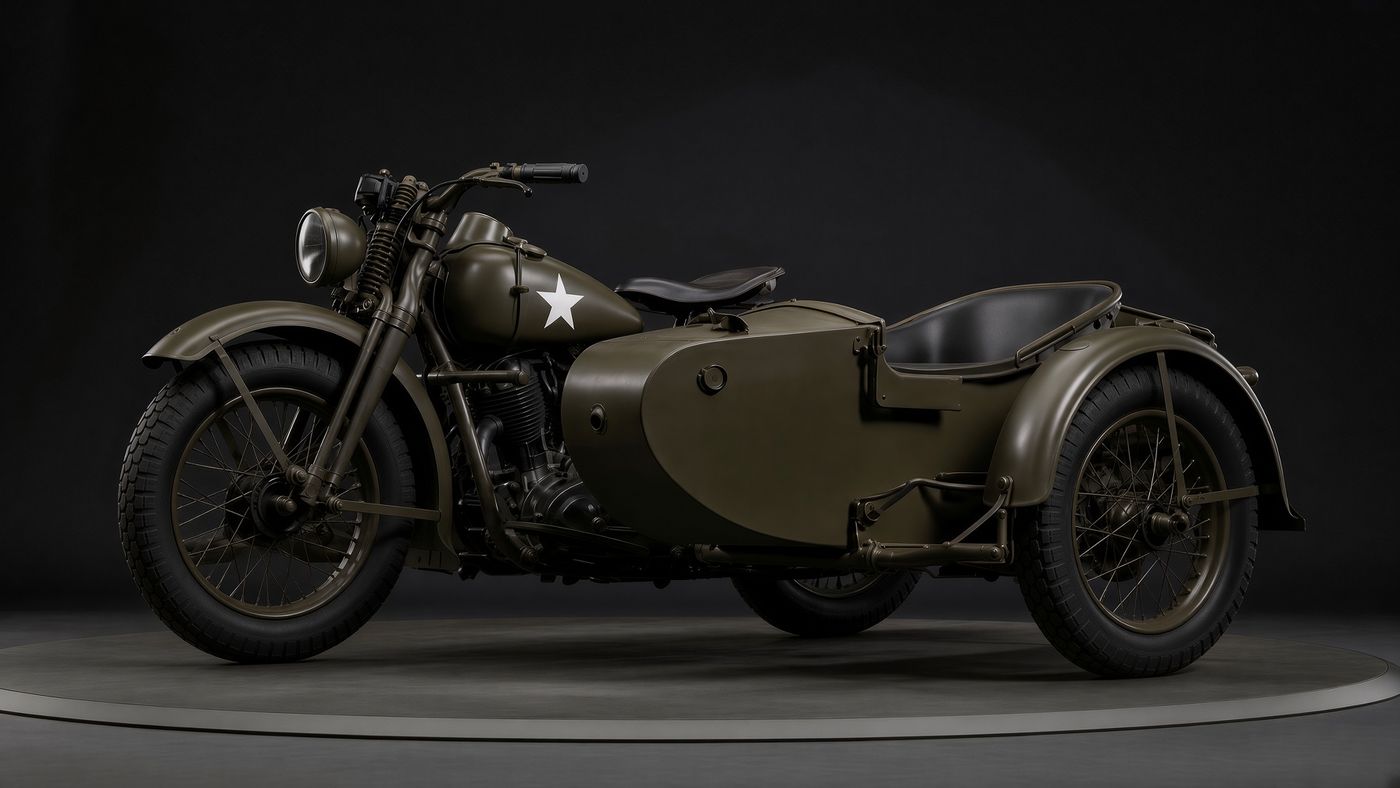
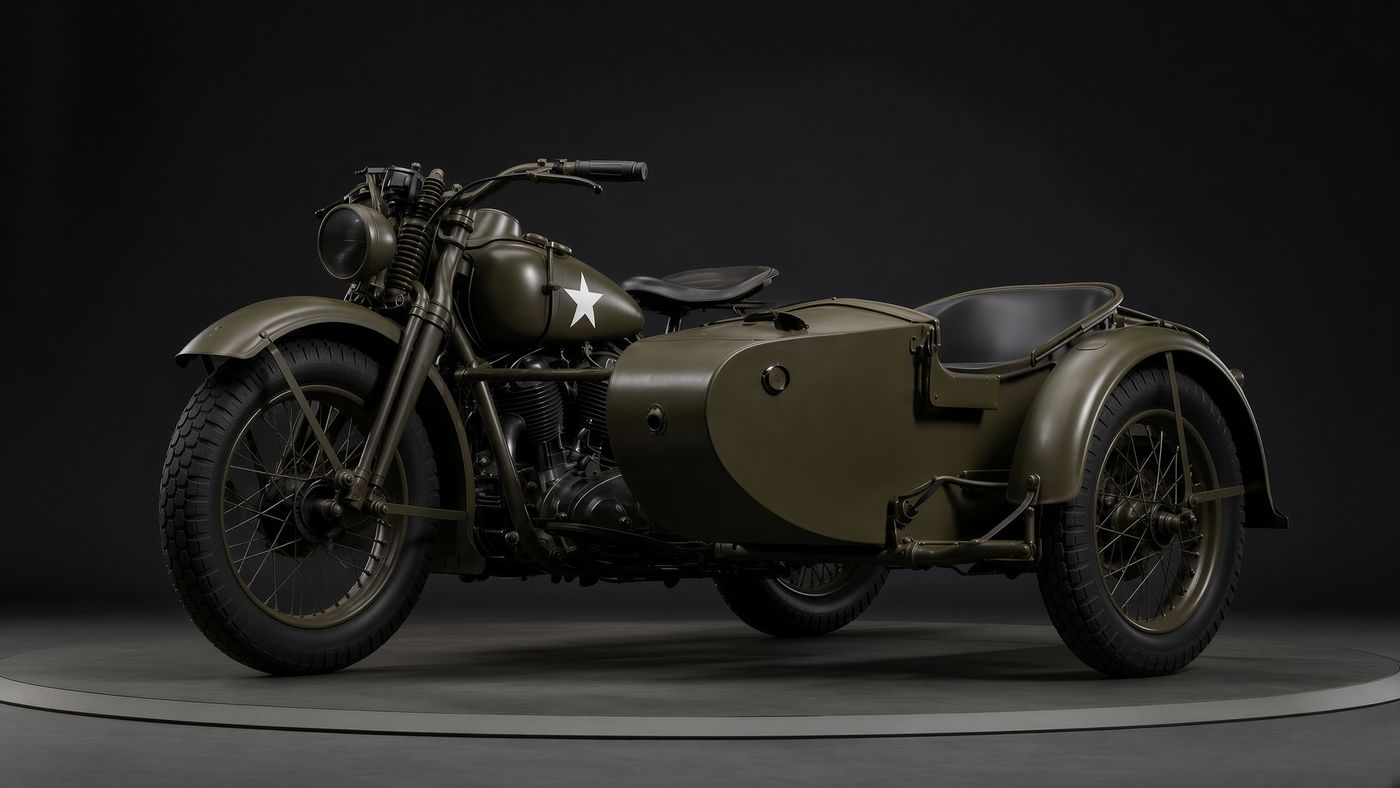
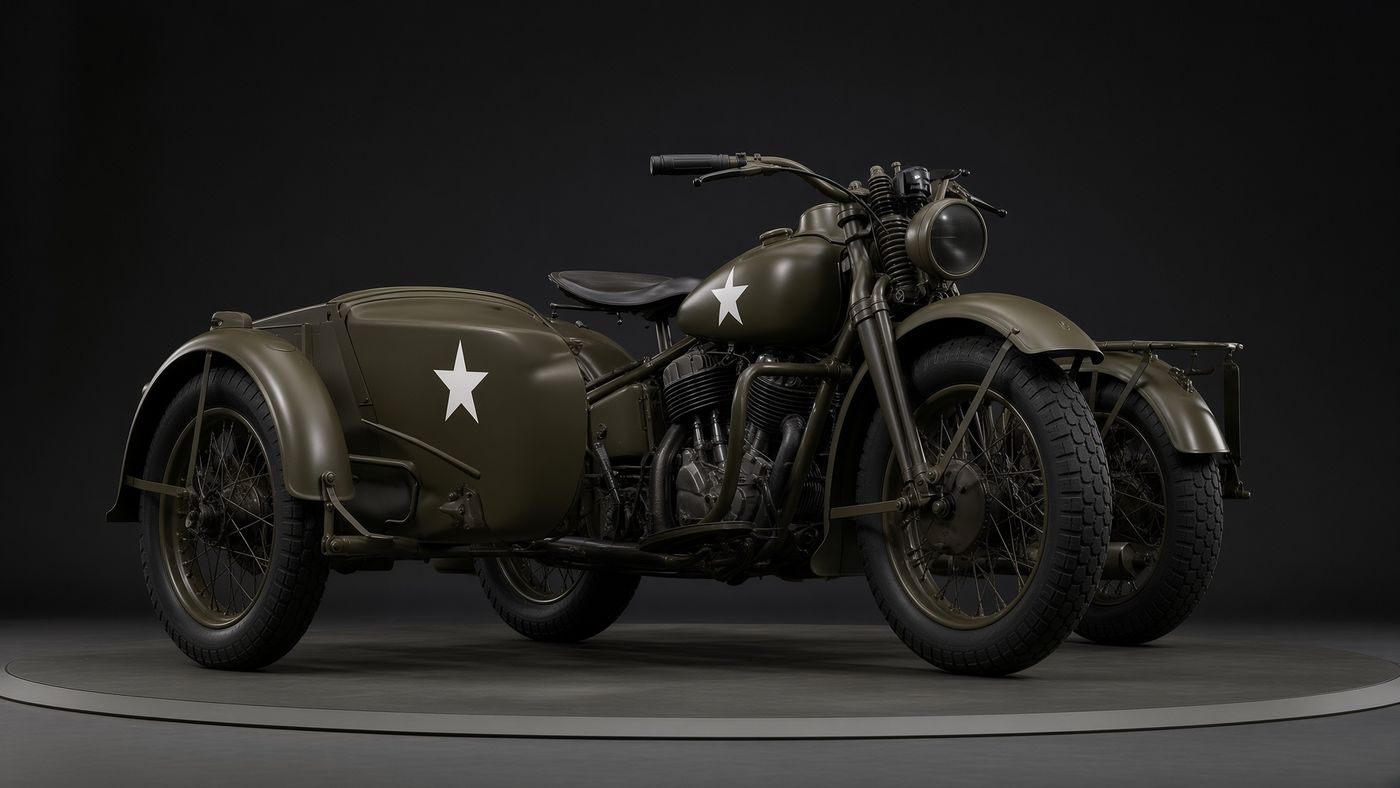
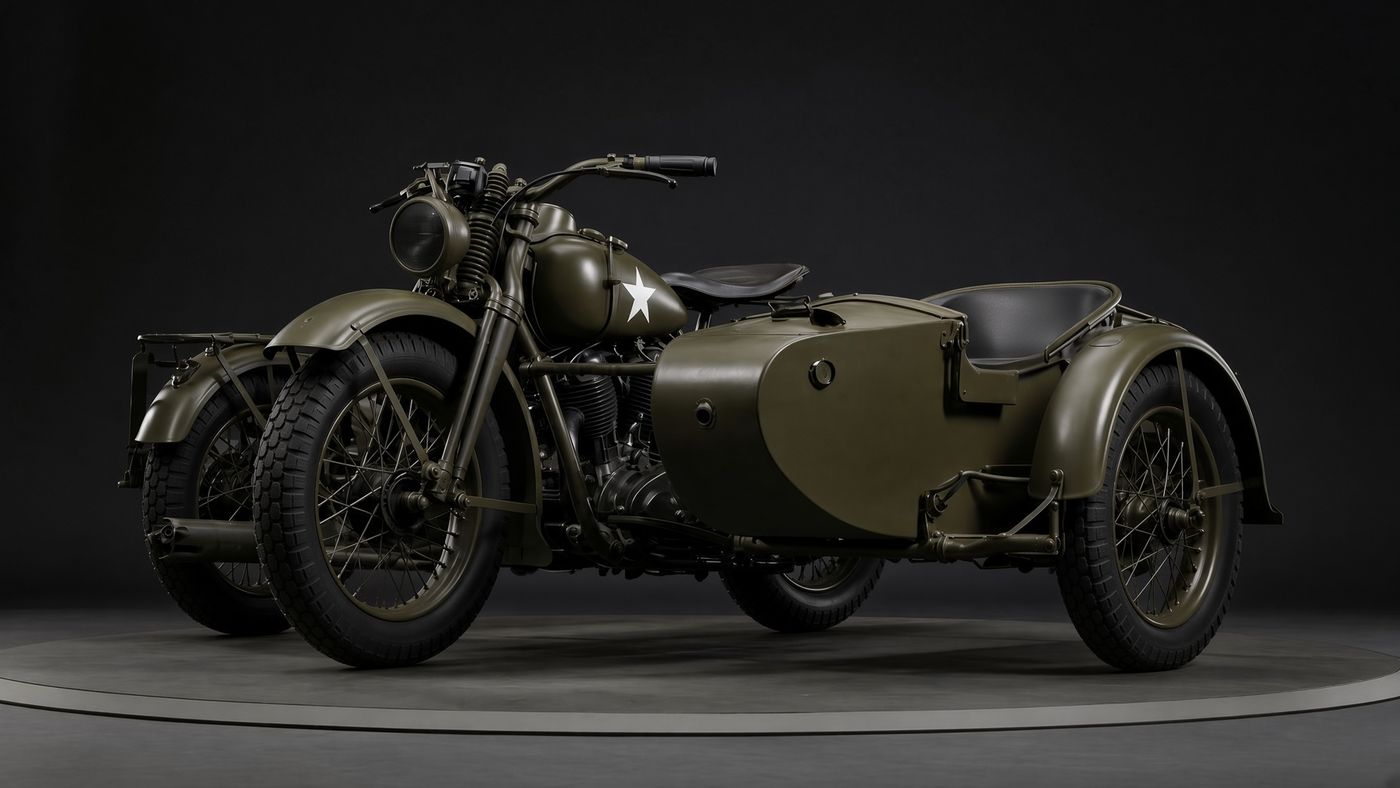
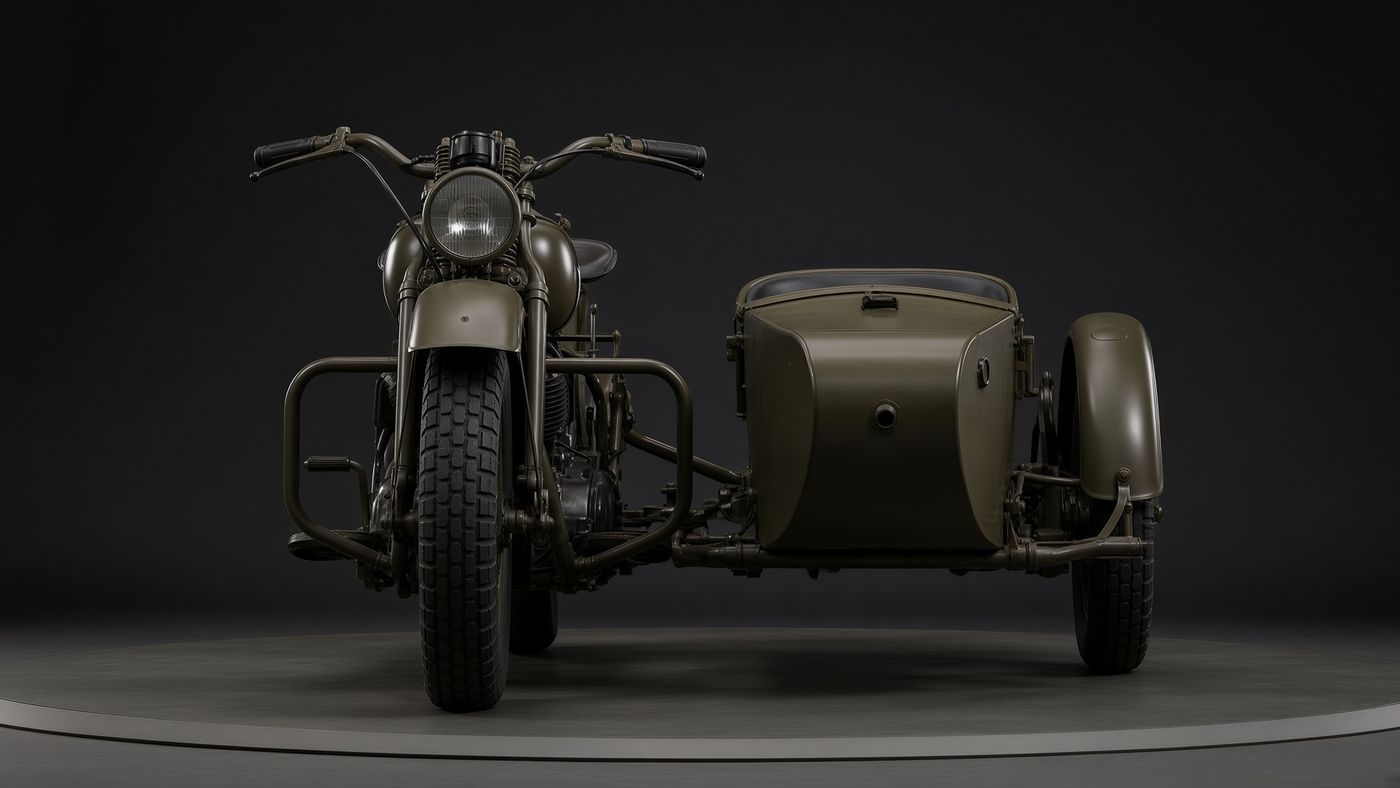
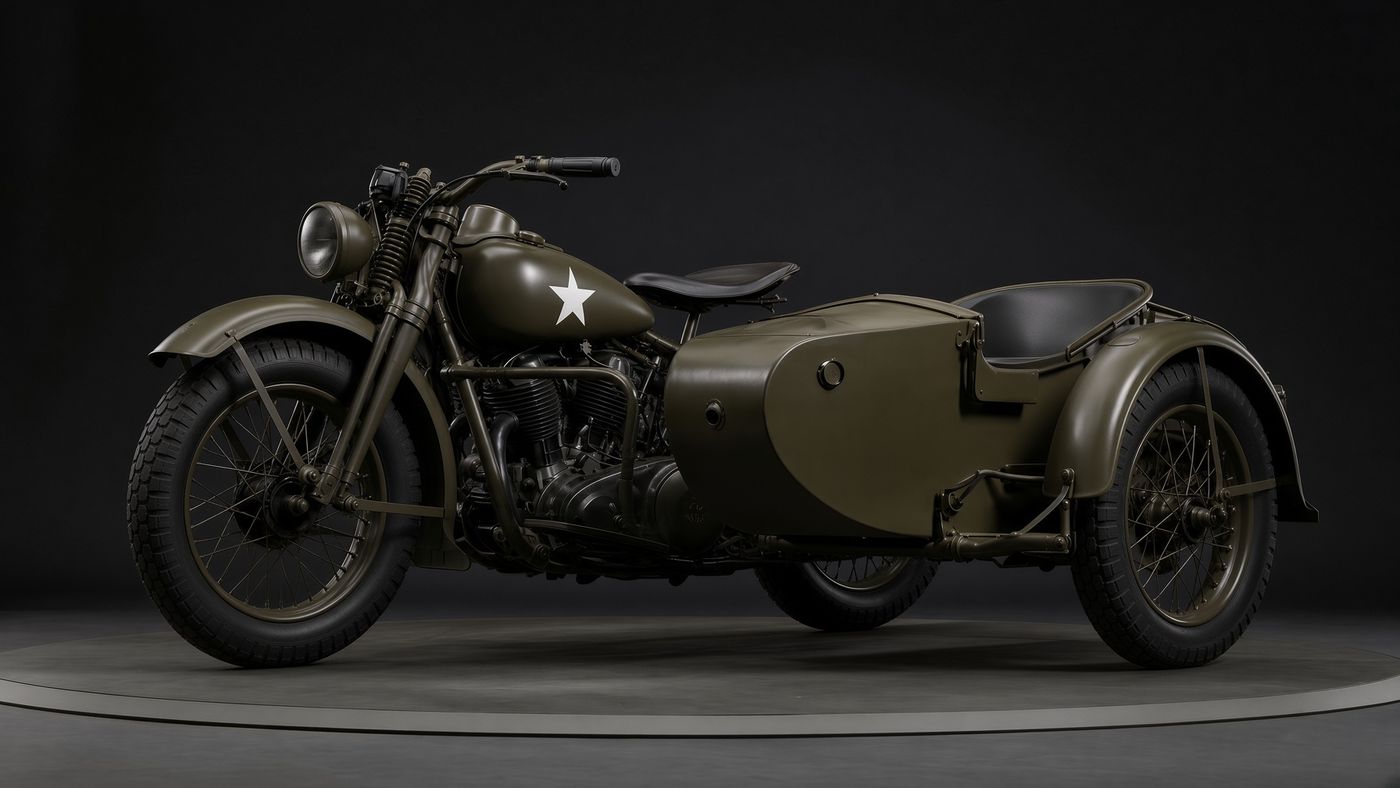
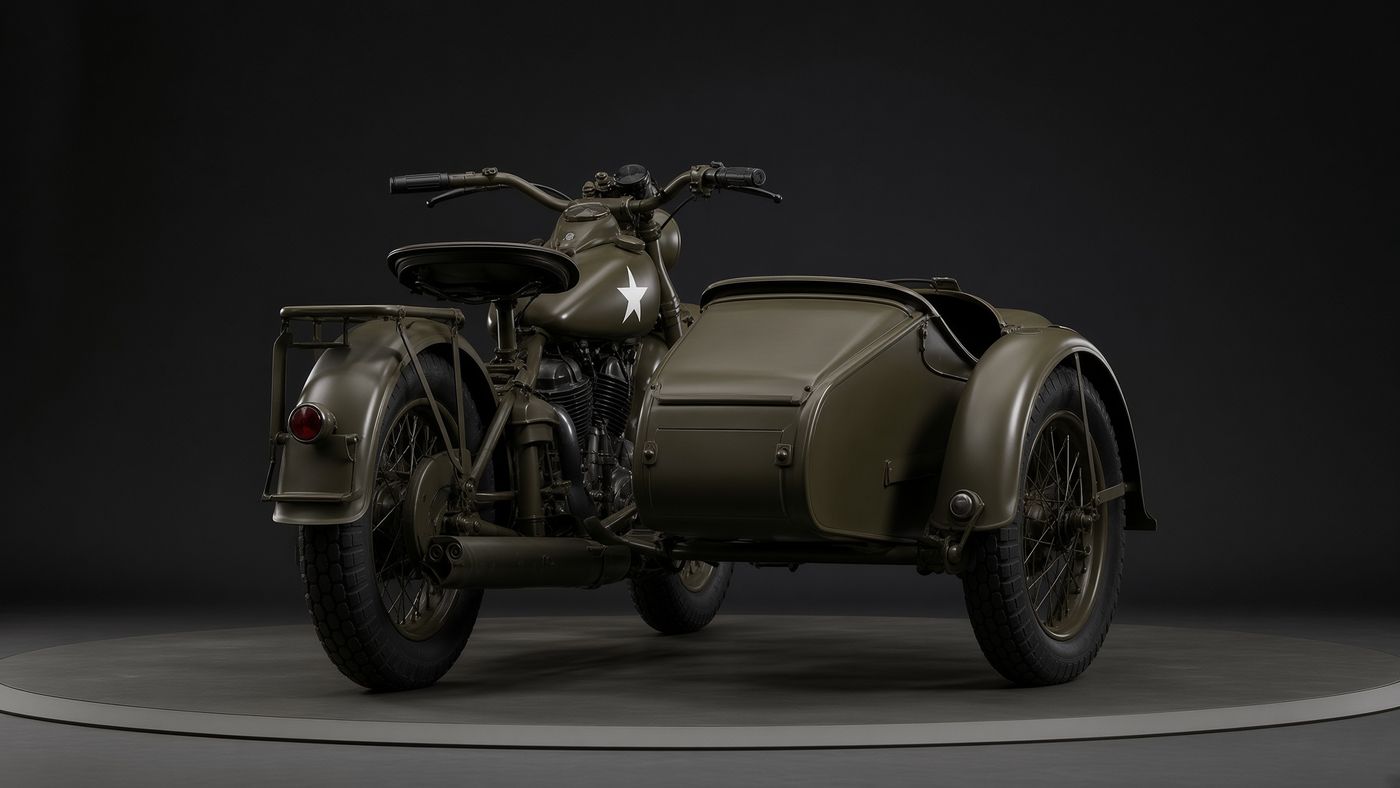
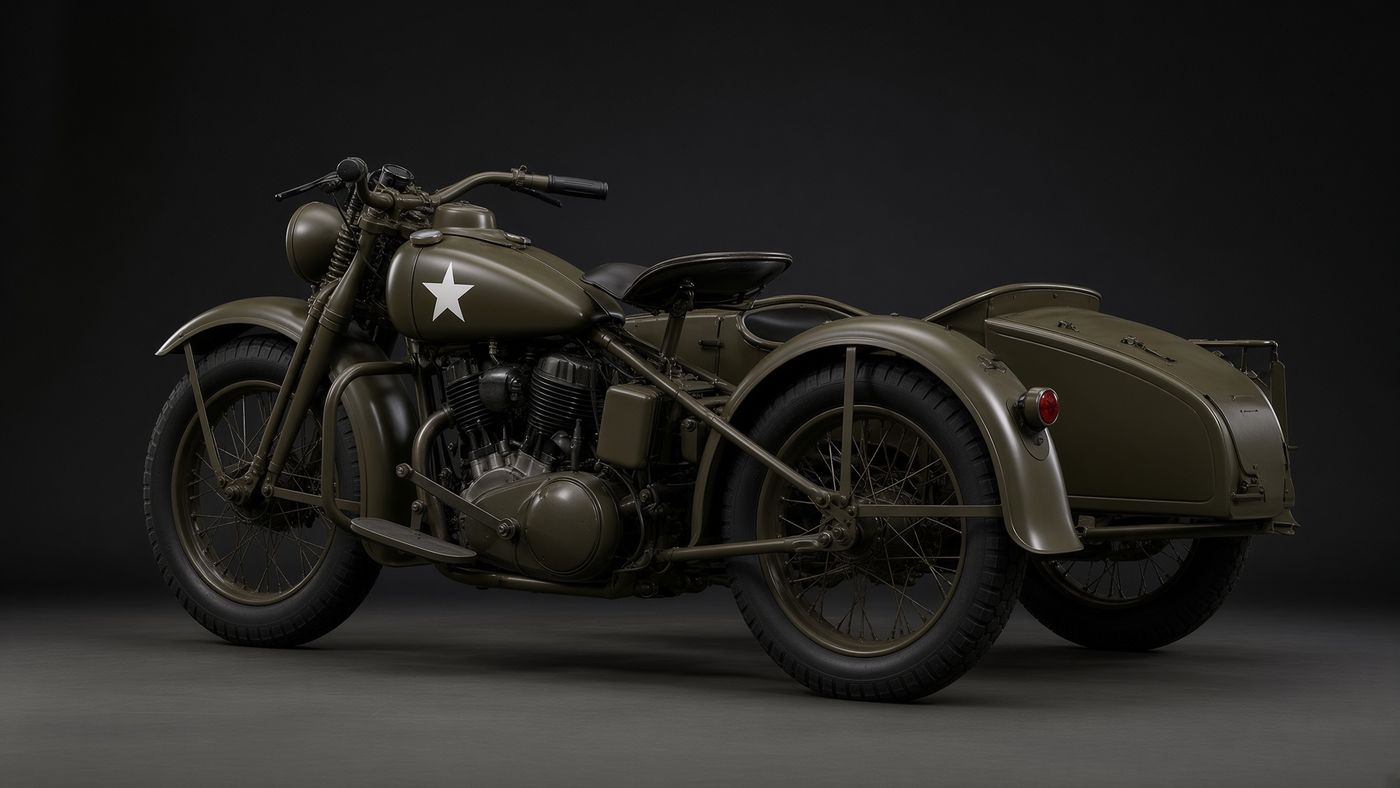
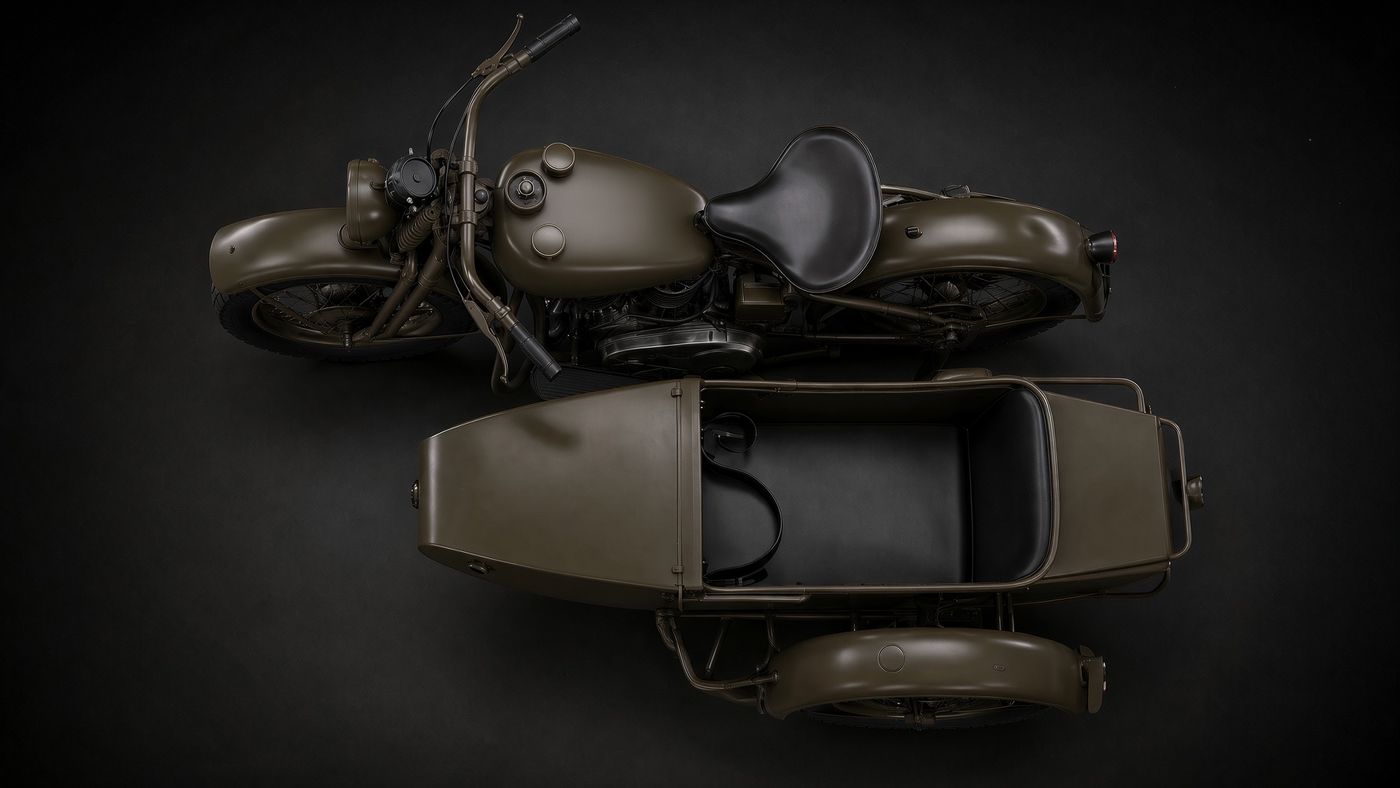
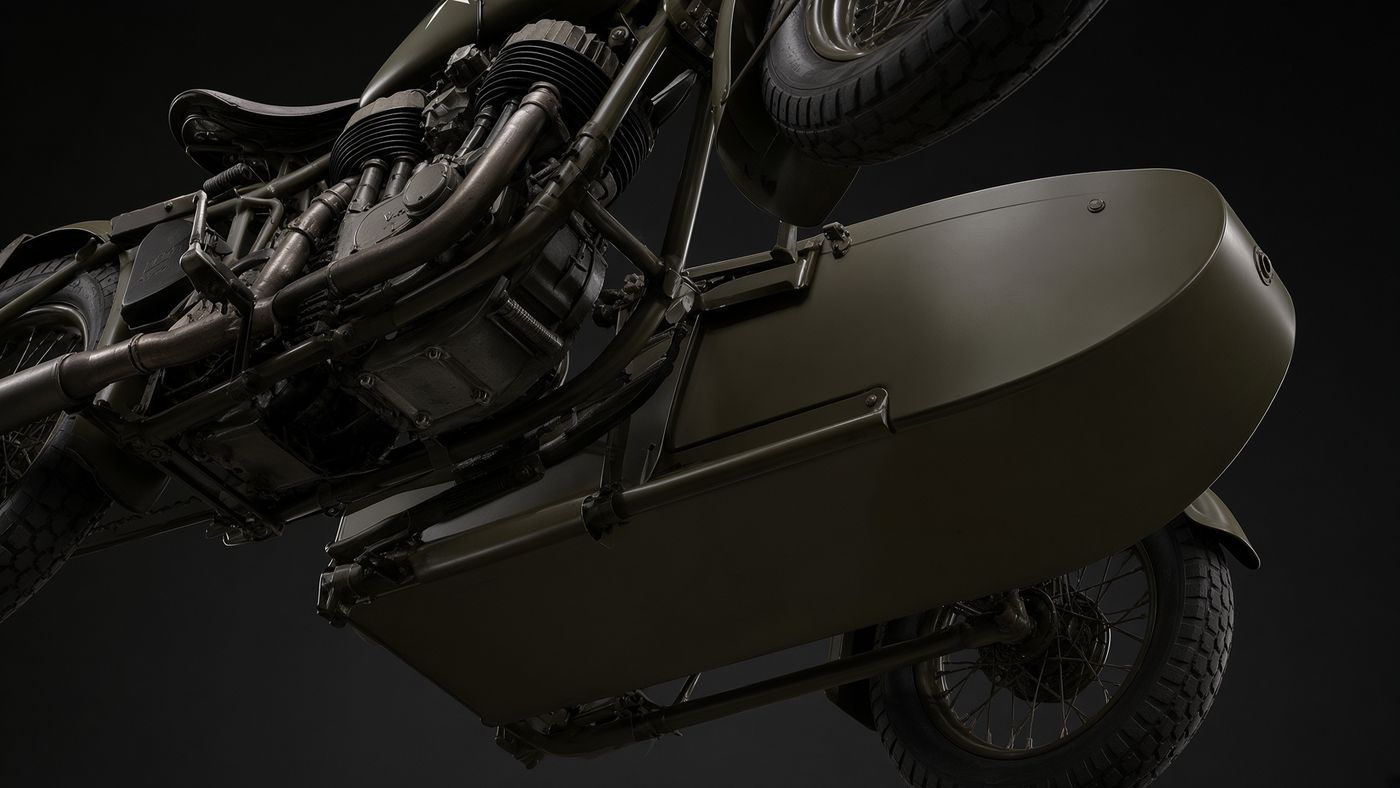
Drag left and right
- Engine
- 45° side-valve V-twin, 739 cc
- Power
- 23.5–25 hp at 4,500 rpm
- Gearbox
- 3 speeds, hand lever
- Speed
- 105–120 km/h (sources differ)
- Dry weight
- 240–261 kg
- Wheelbase
- 1,460 mm
- Tyres
- 4.00 × 18
- Electrics
- 6 volt
A short history
The WLA is born from the civilian WL. The A stands for Army. Milwaukee puts it on the line in 1940; after Pearl Harbor production explodes.
Every WLA leaving after 7 December 1941 carries the 42WLA frame prefix, even if the real year is ’43, ’44 or ’45. It simplified the Army’s papers.
In the war some 70,000 WLA and WLC (the Canadian version) leave the line. Other estimates, like the National Motorcycle Museum’s, speak of more than 80,000. Spares are also made for another ~30,000 bikes.
About 27,000–30,000 go to the Soviet Union under Lend-Lease. There they often bolt on a sidecar and send them to the front. Western Allies use them as dispatch, military police, escort: almost always solo.
In Europe the soldiers who ride them call them Liberator. The name stays. After the war the line stops, then restarts in a small run for Korea, 1949–1952.
Sources: Wikipedia, Harley-Davidson WLA; National Motorcycle Museum, “1942 Harley-Davidson WLA — The Liberator”; theliberator.be. Power, weight and top speed differ slightly across period sheets (23.5 or 25 hp; 65 or 75 mph). Sound: Harley start (Freesound, CC0) and Sportster idle (Freesound, CC0).